Wednesday, April 24, 2013

PF4L: Thursday, April 25


Please read the following articles and answer questions in complete sentences in your notebook.  


1) Do squats hurt your knees (in the general sense)?

2) Do you squat on top of your legs or between them?

3) How far apart should feet be on the squat according to the author of this article?

4) What do you prefer, the "Butt Burner 4000" or "The Eagle"?

5) What is the mistake that most trainees make?


Goblet Squats 101

The greatest impact I've had on strength and conditioning starts with a story:
Years ago, faced with 400 athletes who couldn't squat correctly, I attempted move after move, lift after lift, to teach the squat. I failed each and every time.
I saw glimmers of hope from teaching one kid the Zercher squat (weight held in the crooks of the elbows) and a few picked up the pattern when we lifted kettlebells from the ball off the ground (called "potato sack squats" because they look like you're picking up a sack of potatoes off the ground). But nothing was really working.
Somewhere between a Zercher and a potato squat was the answer. It came to me when I was resting between swings with the weight held in front of me like I was holding the Holy Grail. I squatted down from there, pushed my knees out with my elbows and, behold, the goblet squat!
Yes, the squat is that easy. It's a basic human movement; you just have to be reminded how to do it. Remember, squats don't hurt your knees, but how you perform them can.
Squats can do more for total mass and body strength than probably all other lifts combined. Doing them wrong can do more damage than probably all the other moves, too. The goblet squat fixes all.


Form: Squat Between Your Legs!

Let's start simply. Find a place where no one is watching and squat down.
At the bottom, the deepest you can go, push your knees out with your elbows. Relax. Go a bit deeper. Your feet should be flat on the floor.
For most people, this small movement – driving your knees out with your elbows – will simplify squatting forever.
Next, try this little drill: Stand arms-length from a doorknob (or partner). Grab the handle with both hands and get your chest up. Up!
Imagine being on a California beach when a swimsuit model walks by. When an athlete does this, he immediately puffs up the chest, which tightens the lower back and locks the whole upper body. The lats naturally spread a bit and the shoulders come back a little. Now, lower yourself down.
What people discover at this moment is a basic physiological fact: The legs are not stuck like stilts under the torso. Rather, the torso is slung between the legs.
As you go down, leaning back with arms straight, you'll discover one of the true keys of lifting: you squat between your legs. You don't fold and unfold like an accordion; you sink between your legs. Don't just sit and read this. Get up and do it!
Now you're ready to learn the single best lifting movement of all time: the goblet squat.


Get Started

Grab a dumbbell or kettlebell and hold it against your chest. With a kettlebell, hold the horns, but with a dumbbell just hold it vertical by the one end, like you're holding a goblet against your chest. Hence the name, "goblet squats."
Now with the weight cradled against your chest, squat down with the goal of having your elbows – which are pointed downward because you're cradling the bell – slide past the inside of your knees. It's okay to have the elbows push the knees out as you descend.
6' 9" Olympic basketball player Duncan Reid and 5' 2" Alyssa Umsawasdi.
The point? Each can goblet squat just fine.


Stop Thinking. Start Squatting.

Here's the million-dollar key to learning movements in the gym: Let the body teach the body what to do. Try to keep your brain out of it! Over-thinking a movement often leads to problems. Allow the elbows to glide down by touching the inner knees and good things will happen.
The more an athlete thinks, the more the athlete can find ways to screw things up. Don't believe me? Join a basketball team and get into a crucial situation. Shoot a one-and-one with three seconds to go, down by two points, and get back to me later if you decided thinkingwas a good idea.
Goblet squats are all the squatting most people need. If the bar hurts in back squats (I won't comment), your wrists hurt in front squat (swallowing my tongue here) and the aerobics instructor has banned you from using the step boxes for your one-legged variations, try the goblet squat.
Seriously, once you grab a bell over 100 pounds and do a few sets of 10 in the goblet squat, you might wonder how the toilet got so low the next morning.


Foot Placement and Patterning

Where do you place your feet? Do three consecutive vertical jumps, then look down. This is roughly where you want to place your feet every time you squat. The toes should be out a little. You don't want to go east and west, but you want some toe-out.
This drill, along with the goblet squat, teaches patterning. Unless you already have the pattern, you shouldn't move into heavier work.


From Goblets to Grinds

Like goblet squats, I also have my athletes do grinding moves called double kettlebell front squats (DKFS). The load remains in front, forcing the whole core to stay rigid. Moreover, with two bells, you can still have your elbows down to push the knees out.

Feet a little too narrow here. This guy clearly
doesn't know what he's doing.
DKFS are exhausting in an odd way: like wrestling an anaconda, you seem to be slowly choking yourself to death. The pressure is also teaching you to stay tight, but continue to grease up and down.
Also, the DKFS seems to really work the upper back in the style I call "compression." It's a forgotten method of muscle and strength building where the constant squeezing of a muscle system is the movement, for lack of a better term.
The goblet squat and the DKFS lend themselves to the two greatest workouts I know: the ButtBurner 4000 and the Eagle.


The Workouts

In my last two articles, I introduced these two exercises: the Bulgarian Goat Bag Swing and the Farmers Walk. Let's look at all the fun you can have with these two!
Grab a kettlebell or dumbbell in the 25-60 pound range. Go lighter than you think. Now, do this:

The ButtBurner 4000


  1. Perform one goblet squat, then one Bulgarian Goat Bag Swing.
  2. Perform two goblet squats, then two Bulgarian Goat Bag Swings.
  3. Now, three and three. Work your way up to ten and ten... if you can.
If you just go to fives, that's 15 reps of each exercise. Tens gets you 55 each, and a lot of lost breath. It should go without saying but I'll say it anyway: build up on this one slowly.
This combo will revitalize the entire lower body and teach you to really own both patterns (hinge and squat).

The Eagle

The "Eagle" is named after the school's mascot I used to teach at in Utah. It combines the farmer's walk (the basic patterning or teaching tool for loaded carries) with the grinding double kettlebell front squat.
It's simple:
  1. Grab two kettlebells (I'm not sure anything else works, but you can experiment) and do five to eight front squats.

  2. Drop the bells to your sides and walk away, perhaps as far as 40 meters.

  3. Do another set of front squats.

  4. Walk again.
If you can do eight sets of eight with this exercise (plus serious farmer walks in between) you are in rare air.


Greatness with Patience

The mistake most trainees make is that they try to move too quickly for complex movements before getting the form down. But greatness resides in those who have the patience to master the patterns first, then add complexity later.
The simple patterns can also make for the most shockingly exhausting workouts. Try the ButtBurner 4000 and the Eagle sometime and see the value of simple, hard work.

Thursday, April 18, 2013

(Personal Fitness For Life (PF4L): April 22

Please read the following article and answer the questions that follow below in your notebook.  Please answer questions in complete sentences.

1) When do the majority of exercise-related deaths occur?

2) What are three reasons that walking is an excellent exercise?

3) Why is the squat an excellent choice for "best exercise"?

4) What is "sarcopenia"?

5) What is "H.I.T." of "H.I.I.T"?

6) What is a benefit of stair running?


What’s the Single Best Exercise?

Let’s consider the butterfly. One of the most taxing movements in sports, the butterfly requires greater energy than bicycling at 14 miles per hour, running a 10-minute mile, playing competitive basketball or carrying furniture upstairs. It burns more calories, demands larger doses of oxygen and elicits more fatigue than those other activities, meaning that over time it should increase a swimmer’s endurance and contribute to weight control.
Jonathan De Villiers for The New York Times

Readers’ Comments

Share your thoughts on the Well blog.
ENERGY WELL SPENT In METs (metabolic equivalent to task), a measure of energy exerted for a given activity.

Readers’ Comments

Readers shared their thoughts on this article.
So is the butterfly the best singleexercise that there is? Well, no. The butterfly “would probably get my vote for the worst” exercise, said Greg Whyte, a professor of sport and exercise science at Liverpool John Moores University in England and a past Olympian in the modern pentathlon, known for his swimming. The butterfly, he said, is “miserable, isolating, painful.” It requires a coach, a pool and ideally supplemental weight and flexibility training to reduce the high risk of injury.
Ask a dozen physiologists which exercise is best, and you’ll get a dozen wildly divergent replies. “Trying to choose” a single best exercise is “like trying to condense the entire field” of exercise science, said Martin Gibala, the chairman of the department of kinesiology at McMaster University in Hamilton, Ontario.
But when pressed, he suggested one of the foundations of old-fashioned calisthenics: the burpee, in which you drop to the ground, kick your feet out behind you, pull your feet back in and leap up as high as you can. “It builds muscles. It builds endurance.” He paused. “But it’s hard to imagine most people enjoying” an all-burpees program, “or sticking with it for long.”
And sticking with an exercise is key, even if you don’t spend a lot of time working out. The health benefits of activity follow a breathtakingly steep curve. “The majority of the mortality-related benefits” from exercising are due to the first 30 minutes of exercise, said Timothy Church, M.D., who holds the John S. McIlhenny endowed chair in health wisdom at the Pennington Biomedical Research Center in Baton Rouge, La. A recent meta-analysis of studies about exercise and mortality showed that, in general, a sedentary person’s risk of dying prematurely from any cause plummeted by nearly 20 percent if he or she began brisk walking (or the equivalent) for 30 minutes five times a week. If he or she tripled that amount, for instance, to 90 minutes of exercise four or five times a week, his or her risk of premature death dropped by only another 4 percent. So the one indisputable aspect of the single best exercise is that it be sustainable. From there, though, the debate grows heated.
“I personally think that brisk walking is far and away the single best exercise,” said Michael Joyner, M.D., a professor of anesthesiology at the Mayo Clinic in Rochester, Minn., and a leading researcher in the field of endurance exercise.
As proof, he points to the work of Hiroshi Nose, M.D., Ph.D., a professor of sports medical sciences at Shinshu University Graduate School of Medicine in Japan, who has enrolled thousands of older Japanese citizens in an innovative, five-month-long program of brisk, interval-style walking (three minutes of fast walking, followed by three minutes of slower walking, repeated 10 times). The results have been striking. “Physical fitness — maximal aerobic power and thigh muscle strength — increased by about 20 percent,” Dr. Nose wrote in an e-mail, “which is sure to make you feel about 10 years younger than before training.” The walkers’ “symptoms of lifestyle-related diseases (hypertension, hyperglycemia and obesity) decreased by about 20 percent,” he added, while their depression scores dropped by half.
Walking has also been shown by other researchers to aid materially in weight control. A 15-year study found that middle-aged women who walked for at least an hour a day maintained their weight over the decades. Those who didn’t gained weight. In addition, a recent seminal study found that when older people started a regular program of brisk walking, the volume of their hippocampus, a portion of the brain involved in memory, increased significantly.
But let’s face it, walking holds little appeal — or physiological benefit — for anyone who already exercises. “I nominate the squat,” said Stuart Phillips, Ph.D., a professor of kinesiology at McMaster University and an expert on the effects of resistance training on the human body. The squat “activates the body’s biggest muscles, those in the buttocks, back and legs.” It’s simple. “Just fold your arms across your chest,” he said, “bend your knees and lower your trunk until your thighs are about parallel with the floor. Do that 25 times. It’s a very potent exercise.” Use a barbell once the body-weight squats grow easy.
The squat, and weight training in general, are particularly good at combating sarcopenia, he said, or the inevitable and debilitating loss of muscle mass that accompanies advancing age. “Each of us is experiencing sarcopenia right this minute,” he said. “We just don’t realize it.” Endurance exercise, he added, unlike resistance training, does little to slow the condition.
Resistance training is good for weight control, as well. In studies conducted by other researchers, a regimen of simple weight training by sedentary men and women led to a significant decrease in waist circumference and abdominal fat. It also has been found to lower the risk of developing diabetes and cardiovascular disease. Counterintuitively, weight training may even improve cardiovascular fitness, Phillips said, as measured by changes in a person’s VO2max, or the maximum amount of oxygen that the heart and lungs can deliver to the muscles. Most physiologists believe that only endurance-exercise training can raise someone’s VO2max. But in small experiments, he said, weight training, by itself, effectively increased cardiovascular fitness.
“I used to run marathons,” he said. Now he mostly weight-trains, “and I’m in better shape.”
But there’s something undignified and boring about a squats-only routine. And the science supporting weight training as an all-purpose exercise approach, while provocative, remains inconclusive. Is there a single activity that has proved to be, at once, more strenuous than walking while building power like the squat?
“I think, actually, that you can make a strong case for H.I.T.,” Gibala said. High-intensity interval training, or H.I.T. as it’s familiarly known among physiologists, is essentially all-interval exercise. As studied in Gibala’s lab, it involves grunting through a series of short, strenuous intervals on specialized stationary bicycles, known as Wingate ergometers. In his first experiments, riders completed 30 seconds of cycling at the highest intensity the riders could stand. After resting for four minutes, the volunteers repeated the interval several times, for a total of two to three minutes of extremely intense exercise. After two weeks, the H.I.T. riders, with less than 20 minutes of hard effort behind them, had increased their aerobic capacity as much as riders who had pedaled leisurely for more than 10 hours. Other researchers also have found that H.I.T. reduces blood-sugar levels and diabetes risk, and Gibala anticipates that it will aid in weight control, although he hasn’t studied that topic fully yet.
The approach seems promising, since most of us have minimal time to exercise each week. Gibala last month published a new study of H.I.T., requiring only a stationary bicycle and some degree of grit. In this modified version, you sprint for 60 seconds at a pace that feels unpleasant but sustainable, followed by 60 seconds of pedaling easily, then another 60-second sprint and recovery, 10 times in all. “There’s no particular reason why” H.I.T. shouldn’t be adaptable to almost any sport, Gibala said, as long as you adequately push yourself.
Of course, to be effective, H.I.T. must hurt. But a study published last month found that when a group of recreational runners practiced H.I.T. on the track, they enjoyed the workout more than a second group of runners who jogged continuously for 50 minutes. The H.I.T. runners, the study’s authors suspect, were less bored.
The only glaring inadequacy of H.I.T. is that it builds muscular strength less effectively than, say, the squat. But even that can be partially remedied, Gibala said: “Sprinting up stairs is a power workout and interval session simultaneously.”Meaning that running up steps just might be the single best exercise of all. Great news for those of us who could never master the butterfly.
Gretchen Reynolds (gretchenreynolds@hotmail.com) writes the Phys Ed column for The Times’s Well blog. Editor: Tony Gervino (t.gervino-MagGroup@nytimes.com).

Thursday, February 28, 2013

Girls: Turn On Your Weight Loss Hormones

Girls, read the following article and answer the questions (in complete sentences and restating the questions) in your notebook...

1) What hormone does stress activate in us?

2) What does cortisol specifically make you crave?

3)What are three ways to decrease cortisol?

4) How does less than 8 hours of sleep affect you physically?

5) What are three ways to improve your sleep?

****NOTE: Mr. Rojas personally believes that grains, even whole wheat grains, are detrimental to health and SHOULD NOT BE EATEN REGULARLY unless you are extremely active (like training to run a marathon).

6) What is a tip to improve your eating?

7) What is one way to combine "cardio" and weight training at the same time? TIP... we use them in Health class almost every day!

http://www.prevention.com/weight-loss/weight-loss-tips/how-your-hormones-affect-your-weight


How Your Hormones Affect Your Weight

Turn On Your Weight Loss Hormones

Banish your "bad" hormones, and crank up your "good" hormones with this 4-week plan


Whether it's your period, menopause, stress, a hysterectomy, or plain old heredity, women have felt vulnerable to hormonal cravings and sluggish metabolisms for years, with little to prove it but instinct. Now science is uncovering several bona fide links between female hormones, hunger, weight loss and fat metabolism. And in fact, evidence suggests that taking advantage of female hormones—mechanisms already in place in your molecular biology—may help you to manage your weight, shape, and appetite.

What follows is a female hormone-harmonizing plan, based on the latest data, that may be worth trying if you've had trouble with weight loss in the past. Each week, you'll learn a new way to keep the levels of "snacking" female hormones from inching up into the danger zone or to encourage the levels of "feel good" female hormones to rise. Naturally. Now that's something to be thankful for!

Week 1: Chill Out

If you're like many people, you've got a demanding job, a family who needs you, and a never-ending to-do list. No wonder you feel tired or depressed, anxious or irritable. Or perhaps you can't sleep (although you have no problem eating). 

All are hallmark symptoms of chronic stress. Stress activates the fight-or-flight response, the body's involuntary response to a threat that makes our hearts pound and our breath shorten. Chief among the hormones released during this response is the stress hormone cortisol.


Cortisol automatically kicks up your appetite, prompting you not only to want to eat huge quantities but especially to want sweets and simple carbohydrates-foods that make insulin levels spike and then plummet, which may leave you feeling hungrier than ever-and eating again, says Prevention advisor Pamela Peeke, MD, assistant clinical professor of medicine at the University of Maryland School of Medicine in Baltimore and author of Fight Fat After Forty. "Stress fat" is also concentrated in the last place you need it: deep in your tummy.

To help reset your internal stress-o-meter to normal levels, and perhaps reduce stress-related hormonal cravings, experts recommend the following strategies:

Put magic photos in your "stress zones." Clip to your visor a photo from your anniversary trip to Hawaii to calm you when you're stuck in traffic. Place in your work area beautifully framed pictures of your children.

Excerpted from The Hormone Connection by Gale Maleskey, Mary Kittel, and the editors of Prevention.
Talk some "calming sense" into yourself. Silently repeat a soothing word or phrase, such as "peace," while taking slow, deep breaths through your nose. (Too busy to meditate? Here's how to sneak some mindulness in.)

Schedule regular play periods into your appointment book. Whether it's piecing together a 1,000-piece puzzle or sledding with your kids, play distracts us from our worries, providing a temporary refuge from stress. 

Laugh. In one study conducted at the Loma Linda University's Center for Neuroimmunology in California, a group of men who watched a humorous video were shown to have 30% less cortisol in their blood and significantly lower levels of another stress hormone, epinephrine, during and after the tape compared with a group that sat quietly. Lighten up your commute with a cassette or CD of your favorite comedian or a humorous book on tape. Watch out for funny newspaper headlines or ads. And, of course, watch movies that make you laugh.

Get a massage. Deep-pressure massage stimulates the nerves that cause our levels of the stress hormones cortisol and epinephrine to go down, while the levels of two mood-regulating brain chemicals that act like the hormones serotonin and dopamine rise. This was true in studies of breast cancer patients, conducted at the Touch Research Institute at the University of Miami School of Medicine, and of women with fibromyalgia and chronic fatigue syndrome. Both groups reported reduced anxiety and depression and improved mood and quality of life. Research has also shown that folks who give a massage reduce their own levels of stress hormones. 

Week 2: Get a Good Night's Rest

Besides making you cranky, one theory is that sleep loss (less than 8 hours of sleep a night) may contribute to weight gain by dramatically disrupting the female hormones that control your eating habits and your metabolism.

In one small study, researchers in the University of Chicago's department of medicine compared the hormone levels of 11 men while they got 8 hours of sleep for several nights, followed by several nights of a mere 4 hours in bed. During the sleep-debt stage, the men's ability to process glucose was impaired as much as a person with type 2 diabetes—indicating that sleep debt could lead to insulin resistance, a condition some experts think encourages obesity. In all the afternoons that followed a sleep-deprived night, the men also had consistently elevated levels of cortisol, which encourages your cells to store more fat, particularly when paired with insulin resistance. Not to mention the fact that levels of thyroid hormone, the metabolism powerhouse, were lowered during sleep deprivation.

Whether you have trouble falling or staying asleep, these expert tips should help:

Get outside. The release of hormones in your brain is regulated by the nerve impulses sent by your retinas in response to light. In other words, living by the earth's natural cycle of light and darkness keeps your serotonin and cortisol at their proper levels. Getting at least 30 minutes of natural light a day helps reset our inner alarm clocks, so we'll want to fall asleep at the right time, says Joyce Walsleben, PhD, director of the Sleep Disorders Center at New York University in New York City and author of A Woman's Guide to Sleep: Guaranteed Solutions for a Good Night's Rest.

Take a walk. In one study of more than 700 people, those who took daily walks were one-third less likely to have trouble sleeping until their normal wake-up time. Those who walked briskly slashed the risk of any sleep disorder by half. Regular exercise alleviates stress and also raises body temperature, which primes us for slumber. (See how to get the most out of your walk with Power Walking.) 

Reduce or eliminate stimulants, such as caffeinated coffee, tea, soda, chocolate, and nicotine before bed. Also, avoid alcohol, which is sedating but disrupts sleep. 

Make your bedroom dark. Darkness stimulates the production of melatonin, a light-sensitive hormone produced by the pineal gland, which is located in the brain. Some evidence suggests that supplementing with this hormone can help remedy insomnia. (Take only temporarily under the supervision of a knowledgeable medical doctor.) To manipulate this hormone naturally, invest in thick, heavy curtains, or simply don an eye mask.

Week 3: Eat Right

A healthy diet can have a dramatically positive effect on female hormone levels. The basic plan? A diet that's loaded with whole grains, fresh fruits and vegetables, low-fat or fat-free dairy products, and that contains less red meat and processed foods.

For one thing, a high-fiber diet can help keep your blood sugar levels stable. Otherwise, foods made with refined grains, such as white bread, white pasta, and white rice are digested quickly and speeded into the bloodstream as the body's primary source of fuel: blood sugar. This rapid breakdown triggers a flood of insulin, the hormone that ferries the sugar into the cells. Shortly thereafter, blood sugar levels drop precipitously, which signals the adrenal glands to release more cortisol. By contrast, beans, brown rice, and whole grain cereals take much longer to digest. So insulin levels rise gradually, blood sugar levels remain steady, and cortisol levels don't skyrocket.

Here are some other tips to trick your weight loss hormones with food:

Have "mini-meals." Instead of eating three big meals a day-plus random snacks-eat five or six smaller meals spaced out evenly throughout the day. Keep each meal between 250 and 350 calories. "By eating smaller yet more frequent meals, with correct proportions of proteins, fats, and carbohydrates, you may be manipulating your hormones in favor of reaching the weight you want," says Geoffrey Redmond, MD, director of the Hormone Center of New York in New York City and author of The Good News about Women's Hormones.

Here are theories about why mini-meals work:
  • Spreading small calorie loads throughout the course of a day may trigger growth hormone, which helps keep your body's metabolism efficient-and burning calories.
  • The closer that one small meal is to the next, the less your glucose levels will soar, which means lower insulin on a regular basis.
Make breakfast a must. It is the "single greatest factor in maintaining portion control and stable hormone levels throughout the day," says Dr. Redmond. 

Begin with a protein "appetizer" 10 minutes before each meal. It's possible that doing this sends your body the right signals not to overeat, since protein stimulates the production of the appetite-regulating hormones cholecystokinin and glucagon. Have string cheese or a very small handful of nuts before you sit down to dine.

Forget fat-free foods. Compare labels of fat-free treats with their full-fat versions, and you're likely to find that, in many cases, the calories of fat-free foods are as high or actually higher. That's because sugar and other quickly digested simple carbohydrates are used to make up for the fat-based ingredients. Getting your blood sugar off track can boomerang by making you hungrier in a little while.

More from Prevention: Diet Foods That Sabotage Weight Loss

Week 4: Move that Body

Lacing up your sneakers is virtually a call to action for the weight loss hormones that reverse fat storage and curb eating. "Your muscles are loaded with insulin receptors," says Christiane Northrup, MD, author of Women's Bodies, Women's Wisdom and The Wisdom of Menopause. "The more muscle mass you have and the more heat you generate from your muscles on a regular basis, the more efficiently you'll use insulin and burn carbohydrates and body fat."

There's strong evidence that moderate exercise—a brisk walk, a 45-minute "date" with the Nautilus machines—also triggers the release of "pleasure chemicals" known as endorphins. Finally, working up a good sweat also activates the "feel good" neurotransmitters dopamine and serotonin, which reduce the symptoms of depression.

Your basic exercise plan is as follows:

Get your heart pumping. Prevention recommends 30 minutes of moderate activity, such as brisk walking or bicycling, at least five times a week for fitness. Or, 45 to 60 minutes of moderate activity at least five times a week for weight loss. Before starting any exercise program, talk with your doctor.

Lift weights. Muscles are your calorie-burning furnace, so the better you maintain them, the higher you keep your metabolic rate. "Weight training is essential for women over 40 to compensate for the decreased muscle mass from falling hormones," says Dr. Peeke. (Here's why you should start lifting weights today.)

Prevent the PMS Munchies

If out-of-control cravings drive you to the cookie jar every month, here's what you can do to avoid packing on extra pounds over the long haul:

First, realize that it's normal to experience food cravings around the time of your period, says Prevention advisor Pamela Peeke, MD, MPH. The menstrual cycle delivers a double whammy of two different female hormone groups increasing at the same time: sex hormones (estrogen and progesterone) and stress hormones (cortisol and epinephrine). Some say that the neurotransmitter serotonin also fluctuates with your monthly cycle. These changes drive up your appetite and prompt you to eat the kind of foods that increase your insulin levels.

To minimize the munchies, here's what Dr. Peeke recommends:
  • Eat a little more protein, such as an egg or a cup of beans, at every meal when you have PMS to help prevent wild cravings, Dr. Peeke says, "because protein can give you an exquisite sense of satisfaction."
  • Get your calcium (the recommended Daily Value of 1,000 mg a day from food and supplements). Research shows that it works to reduce PMS cravings. 
  • Exercise, no matter how bad you feel. The aerobic charge will dampen your appetite.
Published November 2011, Prevention | Updated October 2012
http://www.prevention.com/weight-loss/weight-loss-tips/how-your-hormones-affect-your-weight


Read more: http://www.prevention.com/print/23958#ixzz2MCyIozSV

Boys: The Declining Virility of Men and the Importance of T

Boys, read the following article on testosterone and then answer the following questions (in complete sentences, restating the question) in your notebook.

1) Why were your father and grandfather more manly than you are?

2) How much less testosterone do men have today as compared to two decades ago?

3) What are some of the causes of the declining levels of testosterone in men today?

4) How does lower testosterone affect our thinking, virility and swagger?

5) Should men today seek artificial testosterone replacement or find ways to naturally increase it?

http://artofmanliness.com/2013/01/13/testosterone-week-intro/


Testosterone Week: The Declining Virility of Men and the Importance of T

by BRETT on JANUARY 13, 2013 · 98 COMMENTS
testosterone
At the end of last August I decided to start an experiment on naturally increasing my testosterone levels. Kate and I had just finished a month-long series called Heading Out on Your Own: 31 Life Skills in 31 Days. We cranked out a 2,000-4,000 word post every day for 31 days straight. Writing over 75,000 words in less than a month was physically and emotionally taxing on both of us. We were hardly sleeping, were eating like crap, and our workouts became spotty. On top of that, we were stressed to the max.
Knowing a bit about the link between testosterone and a person’s health habits, I had a suspicion my T-levels would be in the tank. Curious, I got myself tested at a lab here in Tulsa.
My suspicion was confirmed.
test1
I had below average testosterone levels.
My total testosterone was 383 ng/dL, which is near the bottom of the reference range of the lab I used.
My free testosterone (testosterone available for your body to use) was 7.2 pg/mL, which is below the reference range. According to many websites, I was a candidate for testosterone replacement therapy.
Crap.
After recovering from the shock that I had such puny amounts of the virile serum floating through my bloodstream, I got busy crafting a plan on how I was going to raise my testosterone in a natural way. I wanted to see how making some simple, long-term lifestyle changes would affect my T-levels. I gave myself 90 days to see what sort of results my efforts would produce.
Three months later, I got tested again.
test2
Total Testosterone: 778 ng/dL
Free Testosterone: 14.4 pg/mL
I had doubled my testosterone.
But is it really that big a deal? Does testosterone really make the man?

Why You Should Care About Your Testosterone Levels

Forget what you think you know about testosterone for a minute. Try to scrub your mind of juiced-up bodybuilding bros in the gym or paunchy middle-age men rubbing prescription gel on their soft bellies.
The subject of testosterone has picked up some unfortunate associations recently, but in reality it’s something every man should understand and be concerned about — whether he’s an egghead or a jock, a grandpa or a college student.
How so? A man is more than his hormones, right? Doesn’t being a man mean stuff like taking responsibility, working hard, and having integrity?
Sure. But do you know who else takes responsibility and works hard? Women.
When we defined manliness, we said that men and women share many of the same virtues, but often attain and express them in different ways. The metaphor we used was that of two different musical instruments, playing the exact same notes, but producing two different sounds — each which adds rich music to the world.
Testosterone is what shapes the form of your instrument — your body and mind — and the “sound” it makes. And for a long time now, there’s been a lot more flutes in the orchestra than tubas. The notes being played remain the same, but the music’s gotten a whole lot less brassy.

Men ARE Less Manly Than They Used to Be

There’s been a lot of talk recently about what’s the matter with men these days. Some folks think men just don’t seem as manly as they used to be. When they compare their grandfathers with men today, the latter just don’t seem to stack up. Plenty of theories get thrown around as to the reason behind this perceived decline in manhood — changing economy, video games, feminism — and much of it is bunk.
But there is in fact one thing about manliness that we can objectively point to as being in decline. Testosterone levels.
Most of you probably know that your individual testosterone levels fall as you age. But studies have shown that men today, across the population, have about 20% less testosterone than men the same age did just two decades ago. That’s a huge dip.
What’s causing this decline? Rising obesity and less smoking, for starters. The latter, while causing a myriad of deleterious health effects, actually increases your T. Go figure. But even when these factors are taken into account, they don’t explain the whole decline. It has been theorized that environmental toxins are also playing a big role. Many modern household products and foods contain chemicals that raise your levels of estrogen, and decrease your T.
Not only does this society-wide drop in testosterone negatively impact men’s health and well-being, which we’ll talk about in more detail in the next post, but it also likely affects the preponderance of traditionally masculine ways of thinking, acting, and feeling.
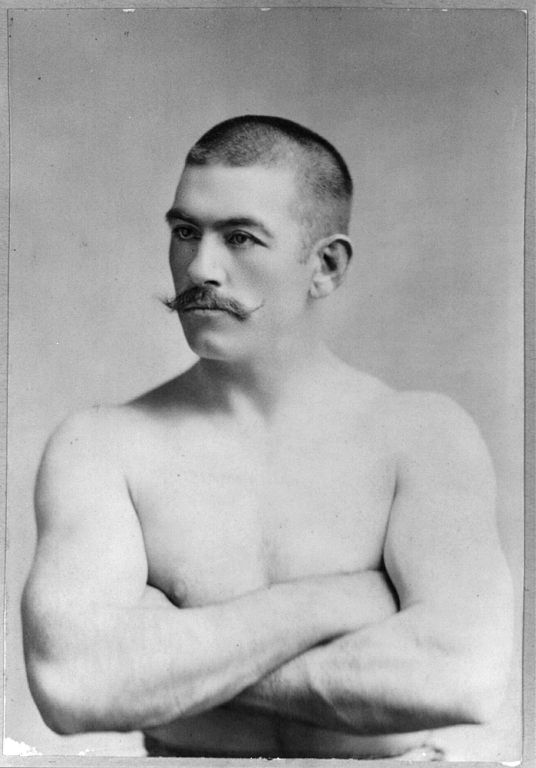
So if you’ve ever felt like men today just don’t have the same swagger, the same virility as your grandpa did, that they don’t look and act as masculine as the strapping men you see in black and white photographs, well it turns out it’s not all in your head. There’s a reason guys today are more like the Biebs than the Duke, and it’s because we don’t have as much T flowing through our veins anymore.

Testosterone Week at AoM

Even if you’re healthy and young, the testosterone deck is stacked against you. And I know plenty of men who regularly live their lives like I was back in August: they eat garbage, they don’t exercise, they get little sleep, and they’re stressed out. On top of the health issues like obesity, high blood pressure, and diabetes that come with such poor lifestyle choices, these gents are likely lowering their T levels even further.
Unfortunately, instead of making the lifestyle changes that would allow their bodies to naturally create optimum testosterone levels, more and more men these days are asking their doctors to prescribe expensive (and potentially dangerous) testosterone replacement therapies.
The sad thing is that many doctors are pushing this artificial testosterone on their male patients instead of encouraging them to lose some weight, get some exercise, and get a bit more sleep. Unless you’re suffering from a severe thyroid problem or have had testicular cancer, there’s really no reason to use artificial testosterone replacement therapy. You can increase your T levels naturally by making some simple changes in your lifestyle.
When I first began my testosterone experiment, I really didn’t know much about it. And what I found in my research is that good, accessible information on the subject is surprisingly hard to find. So what I’ve decided to do is devote a week on the site to helping men understand what testosterone is, how important it is to their health and virility, how to get tested for it, and how to naturally increase it.
Here’s the roadmap for the rest of the week.
Monday: The Benefits of Testosterone – Men of all ages should take advantage of the myriad of powerful benefits that come with having optimal levels of testosterone. I’ll also discuss some of the myths about testosterone.
Tuesday: Understanding Testosterone – We’ll take a look how our body creates testosterone so we can understand how we can increase our T naturally.
Wednesday: What’s a “Normal” Testosterone Level and How Do I Get Tested? - We’ll look at why “normal” testosterone levels are deceptive and how you can get your testosterone levels tested.
Thursday: How to Increase Testosterone Naturally - In my final post I’ll share with you everything I did to double my testosterone.

Tuesday, February 19, 2013

Work, Rest, Play, Pray: Explained

Read the following article and answer the following questions in complete sentences in your notebook.  

NOTE: NOTEBOOKS MUST BE TURNED IN AFTER COMING IN FROM OUTSIDE OF THE CLASSROOM.  THE FIRST GROUP OUTSIDE WILL NOT RECEIVE CREDIT IF NOTEBOOKS ARE LEFT OUTSIDE.

1) What is the difference between health and fitness?

2) Who was Sister Maria Assumptua and what did she teach Dan John?

3) What does "Pray" mean for you?

Fill out the following chart with your own ideas and personal information:


4) Work
5) Rest
6) Play
7) Pray


http://www.t-nation.com/free_online_article/sports_body_training_performance/work_rest_play_pray_explained


Work, Rest, Play, Pray: Explained


About a year ago, I wrote an article about rest. I was so exhausted after writing it, I took some time off. One interesting thing about that article is the number of requests I've received asking me to expand on the topic.

Seasoned, elite warriors seem to really want to hear about balancing life with overwhelming levels of stress. It's odd to tell someone at the end of their rope that maybe doing something "harder" will ease the tension. But, it works.

Why do people continue to fall into the trap of smashing their head against a wall only to discover (usually much later) that it hurts to smash your head against a wall? What's this insanity I continue to see in the strength, conditioning, and fitness world where people are willing to trade in a future of chasing great-grandchildren around a park for a temporary fix that delivers higher-peaked biceps or fuller pecs?

I can only help with some part of the madness, but I am willing to step up. Really, the bulk of my rantings centers around this lunatic idea that, somehow, putting yourself next to death's door is good for you. Oh, I've seen the t-shirts.

Why did simple questions like, "I want to feel better, can you help me?" or "I'd like to lose a few pounds, what should I do?" turn into battlefield tactics?

Well, the first problem is the idea that health and fitness are the same thing. They're not, and when you confuse them, you really start down the wrong road. I've been using Philip Maffetone's definition of health for a long time now: Health is the optimal interplay of the organs.

Health is something that can always get a little better. It's measured by blood tests, longevity, and the lack of bad health. Health doesn't have the presence of illness. 

Tumors, high blood pressure, and fainting are not signs of good health.
Health is something you probably take for granted, until you don't have it. In fact, I remind myself often to breath in deeply, smile, and enjoy a moment of good health. It's a gift.

There's Health, and Then There's Fitness
Didn't Maffetone (and I) really just define fitness, too? No. Fitness is simply the ability to do a task. Years ago a guy I know jumped, while drunk, into the shallow end of a swimming pool and broke his neck.

He can't move well, but he fathered two sons. He's "fit" for the task of procreation, although he can't walk. If you can do 100 pull-ups in an hour or run a marathon, but you have a major cancer lurking inside your body, you are fit for a task but not healthy.

People often comment on the way I train athletes. I have my throwers throw. For the record, my jumpers jump and my sprinters sprint, but I don't want to give away all my trade secrets.

Here's the thing, though, my throwers don't run. My throwers don't do agility drills or jumping or, really, just about anything other than throw and lift. Why? Because I want them to be fit to throw.

The more a thrower throws, the smoother the technique and the farther the implement goes. The more a thrower throws, the "fitter" the thrower becomes. Sure, your athlete might jog more than mine, but there's nothing in the rulebook that rewards jogging for throwers.

For health, I have my throwers floss their teeth twice day, insist on them wearing seatbelts and helmets on bikes or motorcycles, and encourage a generous use of fish oil. Moreover, I'll encourage my throwers to find a life partner willing to remain active physically, optimize rest and recovery, and discover a spiritual life. But jogging? Nope, that's an issue of fitness.

The New Compass for a Balanced Life
Achieving clarity in the role of health and fitness was the single biggest hurdle in my coaching career, but I think my first glimpse into the art of lifelong fitness actually happened in the second grade.

The fact that I can remember a talk from the early 1960s, literally decades and miles ago, is enough to thank the memory of Sister Maria Assumpta and her few minutes at the chalkboard.

Sister walked up to the board and put up a basic compass shape. Rather than North, South, East, and West, she replaced them with Work, Rest, Play, and Pray. Very simply, she told us, "Your lives should always live in a balance with these four things."
If you work too much, you'll ignore important things and "burn out." If you rest too much, you'll become slothful and ignore real living. If you play too much, you'll be like the grasshopper from Aesop's tale who played all summer, instead of storing food, and starved to death in winter as a result.

Curiously, Sister never went into praying too much. I guess she figured that was a given.

But I've often pointed out that "pray" could just as easily be "alone time" for some.
"Pray" could also just be taking an appreciation of goodness or beauty. There's something restful about watching a waterfall or witnessing a plane land at night. Breathe in, breathe out, and enjoy it.

See The Compass In Action
Like natural fractals — objects that seem to display a self-repeating structure when looked at from a great distance or up close (think snowflakes, mountains, and rivers) — one's entire life from birth to death can be looked at by the Balance Compass.

Look back over your life and find times where you seemed "whole" and your life was full. If you look close enough, you can usually see that you were also holding work, rest, play, and pray in balance.

You took care of business, but also took your shoes off and played in the sand. You probably had good friends, worthy of the title, and enjoyed some time to take care of your personal and spiritual needs alone.

Narrowing down from the fractals model can give you some insights about how these four compass points can illuminate any successful venture. One's day, one's workout, and perhaps even one's morning coffee could be seen in this same way.

Let's use a training day: Too much training (work) can lead to soreness, injuries, and fatigue. What's worse is that the workouts that work you out, literally, tend to only be short-term and will have you regressing over the long haul.

Too much rest in a workout can be fairly broad. Few people honestly have this issue in training. Instead, they tend to rest, sit, sleep, and watch TV so much that their rest reserve is well in hand.

Too much play is something I just don't see much anymore. I'm convinced that most of us would never need workout DVDs or personal trainers if we all just met in the field after work and played some games. Freeze tag is an under-realized workout modality.
Though, it's possible to have too much socializing during a workout. A lot of gym rats, and Internet personae, would rather talk about great workouts instead of having one.

Too much alone time (pray) is something I've had to undo in my own training. I trained in my garage for years, but found a lot missing. By inviting friends over or by popping into a gym every so often, I push myself harder than when I train alone. It's a small thing, but it makes a real difference in intensity.

So, the "answer" to all of this is to insist that you take some time and energy to think about how you balance a workout.

Design Your Balance Compass
I want you to take the time and write out something like the following chart, and to drive the point home, really write it, don't type it (I'll explain how to use it below):

Work
Rest
Play
Pray
It was my good friend, one of the brightest writers in the field of nutrition, Robb Wolf, who not long ago suggested that I add "Longevity" to this Life Balance Compass.

Beginning as early as you can in life, it's worth thinking about living as well as you can for as long as you can. In other words, when considering something that may be unsafe, unhealthy, or dangerous ­— an un-warmed-up two rep max, the deep fried Twinkie eating contest, that late-night rendezvous with the girl you've broken up with four times this semester — at least take a second to ponder the longevity question.

Also see that I include performance along with fitness. For whatever reason, no matter how many times I define "fitness," most people choose not to hear "ability to do a task." So, I specifically added Performance, since many people seem to hear that as "completing a marathon," or "salsa dancing like the good ol' days."

While any unit of time — lifetime, decade, year, month, week, day, or hour — can work, think a bit more globally on the chart the first time you try it. Let's use this coming year on your first attempt.

In each area, write in a short note about how you'll use your full mind, body, and spirit to engage all four points and all three "pillars" (again, Robb Wolf's term) to balance yourself by the end of 2011. For example:

Work
 I will keep a supply of dental floss, fish oil capsules, and water at work.

 I will finish the 5K "Walk for Life."

 I will take an easy walk, bike, or swim at least five days a week.

Rest
 I will turn off the television at 9:00pm every night, unless there is a show or sporting event that I "must see." Otherwise, I will spend from 9:00pm to 10:00pm preparing for sleep.

 I will stand up from my desk every half-hour and walk around for a few minutes to relax and recharge.

 Either through audiotapes, DVDs, or lessons several days a week, I will learn to put myself into a relaxed, meditative state within minutes.

Play
 I will learn to laugh more at work, especially by posting Dilbert or Calvin and Hobbes comic strips as appropriate to situations that arise.

 I'm going to say, "Yes!" to every chance to play in a game, no matter what the game or sport.

 Each month, I will schedule at least one "hang out and graze"-session with friends.

Pray
 I will take some time each day just to be alone for a few minutes.

 I'm going to master a difficult physical task. (Choose any one, there are plenty: Full side split, a one-arm chin-up, a particular lift, a yoga move, etc. Mastery is a path, not a goal, but get on the path!)

 People who go to church live longer. I should consider where I am with this.
The next step is to look at all these "I wills" and try to find the connections. For this example, the stress of the work place is obviously a factor, as well as time management.

Little things, like less television and changing the mindless commute into what many call "the mobile university," can make a huge difference. Everybody has the same amount of time in a day, but how they spend it is a very different thing.

When you make a small, easy change for the better in one area of your life, it seems to carryover into the other areas. Once you start flossing (yes, I keep repeating it), you seem more in tune with other things you put in your mouth and maybe you'll skip the birthday cake in the break room at work.

Skipping the cake can give you the courage to come home from a long day and still get in a good workout. Working out invigorates you enough to not click on the TV and slump into the couch.

Yes, it's that simple and, yes, it works that well. When you have it all dialed in, you'll laugh at the simplicity of this chart. It's when you struggle that you need to wake up and reassess this focused attempt to have balance in your life.

When You Really Need a Compass
This "compass thing" might seem all well and good once it's in place, but how do you first recognize that you are spinning out of balance?

I recently saw an interesting way to spread the concept of health and fitness across a continuum and spot problems on the horizon, from Dr. Paul Hammer. Imagine the standard traffic light to better visualize. Green is go, yellow is caution, and red means stop.

If you're on the green side of the continuum, congratulations, you've got it dialed in. My goal is to be in the green for every area of my life. For me, life in the green is all about having some reserves. I have enough in the bank to cover a minor tragedy like a broken water heater and I have enough time to help a buddy move a couch.
I have enough energy to train and enough energy after I train to still enjoy some entertainment with my family. I'm enjoying life, keeping in decent shape, and sleeping well.

In the green, nobody pulls you aside, puts their arm around you, and says "Hey, I'm a little worried about this or that with you." And by the way, if there's nobody in your life to warn you about excess, that's a sign you aren't in the green.

Yellow is not as bad as one may think, but it's important to remember "caution" from driver's education class. This isn't a time to speed up! In some of the most productive times of my life, I've also felt myself spinning out of balance. At these times, I often just look at the calendar. If I can see "relief" in sight, I don't worry too much.

Knowing that the pressure will ease, eases the pressure. I'm "lucky" because I have friends, family, and a schedule that all support the stressful times. Like I always tell people, I really had to work hard to be so lucky.

The red zone means an intervention is needed. That's something like a DUI, an arrest, a serious injury, or another traumatic issue. This is not the area for friends. This is a time for professional help.

It's far beyond the scope of this article to discuss "fixing" these red types of issues, but if you find yourself in a yellow light situation for long enough with no respite in sight, address it now. Don't wait to hit the red.

However, don't always focus on the negative here. The great insight I learned about the Balance Compass is that these four great truths — Work, Rest, Play, and Pray — tend to spiral out, eventually.

If I decide to work harder, I now find it natural to increase my play. I play harder when I work harder. My vacations, perhaps reflecting the increase in money from working harder, are "bigger." There's a tremendous synergy when I look at consciously increasing my other compass points when I take on a task.

It also begins to affect how you go about your goals. I've become famous for hosting very hard workouts in the backyard along the river. We have one or two dozen people taking turns pulling, tugging, running, and carrying various odds and ends. It's a fun, playful workout and we keep the grill going the whole time.

After training hard, we "hang out and graze" for hours on the deck, laughing and enjoying life. Of course, I balance this with some workouts where I train alone and try to figure ways of besting my friends next time, and thinking of even more devious ways to exhaust them when they come back next time.

When you're approaching a decision to expand yourself, take a few minutes to expand all four compass points. I bet you find the road to success a lot easier and, oddly, more fun.

The Biggest Mistake You Could Make
There's one final idea to help you discover balance towards your health and fitness goals. Realize that there are ups and downs, lefts and rights. Don't constantly worry about improvement.

The biggest issue most people have is that they think linear. Life isn't linear. Do we start squatting with 100 pounds and add five pounds every single week? Within one year we'd squat 360, and in two... 620 pounds. I wish!

Play around with this wonderful life compass and rethink progress. Part of the reason I think I've had long career is that I retire just about every time something bad happens and swear to never come back. A few weeks later, after some (apparently much needed) rest and relaxation, I un-retire and come back healthier, happier, and, almost always, "better."


I Will Not Be Broken
Hopefully you won't. However, your vertebrae may someday disagree.
Trey Brewer Pose
He's perfectly fit for the stage, but is he healthy?
Waterfall
Simply watching a waterfall can realign your perspective.
Arnie Flat Bench
Mastering a difficult lift pays off, whether you train alone or with a group.
Another Afternoon with Dan
Steak on the grill and a bar overhead. Just another afternoon with Dan.